


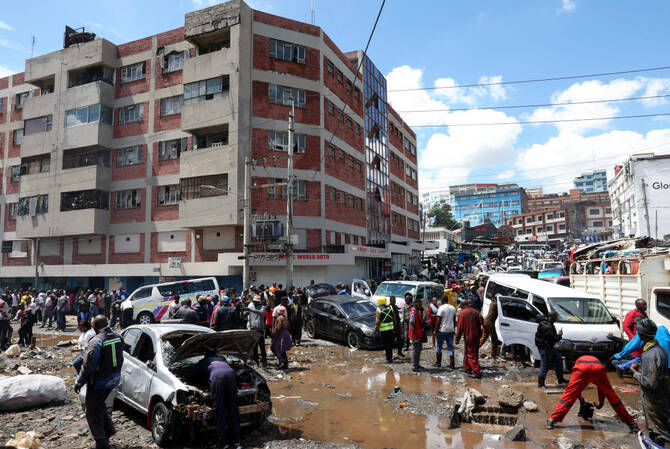
Recent floods across Nairobi have once again exposed critical weaknesses in the city’s infrastructure, urban planning, and environmental enforcement — raising urgent questions not just for policymakers, but for businesses operating within these high-risk environments.
Following heavy rains that have claimed over 60 lives nationwide and displaced thousands, lawmakers have turned scrutiny toward the National Environmental Management Authority (NEMA), questioning its role in preventing the unchecked environmental degradation that continues to amplify flood risks.
But beyond the political accountability debate lies a deeper issue: systemic planning failure — and its growing cost to businesses.
The Real Problem: Urban Growth Without Structure
At the center of the crisis is a mismatch between Nairobi’s rapid urban expansion and outdated infrastructure systems.
Much of the city’s drainage network dates back to the 1970s, built for a population and urban footprint far smaller than today’s reality. Over time, this has been compounded by:
- Unregulated construction on riparian land
- Blocked drainage systems due to poor waste management
- Informal settlements lacking sewer infrastructure
- Weak enforcement of environmental regulations
Lawmakers have argued that approvals of illegal developments and lack of follow-through by regulators have worsened the situation, allowing risk to accumulate over time.
The result is predictable: flooding is no longer a seasonal inconvenience — it is now a structural business risk.
High-Risk Zones: Where Exposure Is Rising
Recent assessments under the Nairobi Rivers Regeneration Programme have identified 37 flood-prone areas, including:
- Eastern zones: Kayole, Donholm, Ruai, Komarock
- Western zones: Kawangware, Westlands, Lavington
- Northern settlements: Mathare, Korogocho
- Commercial hubs: Industrial Area, Eastleigh, CBD
These are not just residential zones — many are key economic and logistics corridors. Flooding in these areas disrupts:
- Supply chains
- Workforce mobility
- Inventory storage
- Customer access
For businesses, this translates directly into lost revenue, damaged assets, and operational downtime.
The Hidden Cost to Businesses
While the public narrative focuses on infrastructure failure, businesses are already absorbing the financial impact:
- Increased insurance premiums
- Asset damage and inventory losses
- Logistics delays and higher transport costs
- Reduced productivity due to staff displacement
In sectors like logistics, retail, manufacturing, and real estate, these disruptions can compound quickly, eroding margins and weakening long-term sustainability.
Where Janta Comes In: Turning Risk Into Strategy
At Janta Kenya, we view crises like this differently — not just as environmental or policy failures, but as strategic blind spots in business planning.
Too many businesses operate without:
- Location risk assessments
- Infrastructure vulnerability analysis
- Business continuity plans
- Scenario-based financial planning
This is where advisory becomes critical.
How Janta Helps Businesses Navigate This Reality:
✔ Risk Mapping & Location Strategy
We help businesses evaluate exposure before setting up operations — identifying flood-prone zones, infrastructure gaps, and long-term viability.
✔ Operational Resilience Planning
From supply chain diversification to contingency planning, we design systems that keep your business running even when disruptions occur.
✔ Financial Structuring & Insurance Advisory
We guide businesses on how to structure financial buffers, optimize insurance coverage, and protect against unpredictable losses.
✔ Compliance & Regulatory Advisory
With increasing scrutiny from regulators like NEMA, we ensure your business is aligned with environmental and planning requirements — reducing legal and reputational risk.
The Bigger Lesson: This Is Not Just a Government Problem
It’s easy to place responsibility solely on regulators or government agencies. But the reality is more complex.
Urban risk today is shared across:
- Government (policy and infrastructure)
- Developers (construction practices)
- Businesses (location and planning decisions)
- Citizens (waste management and land use behavior)
Flooding in Nairobi is no longer an isolated event — it is a predictable outcome of systemic gaps.
Final Insight
For businesses, the takeaway is clear:
If your strategy does not account for environmental and infrastructure risk, it is incomplete.
As Nairobi continues to grow, disruptions like flooding will become more frequent — not less. The businesses that survive and scale will not be the ones that react fastest, but the ones that plan best.
At Janta Kenya, we help businesses move from reactive decisions to proactive strategy — because in today’s environment, resilience is no longer optional. It is a competitive advantage.