


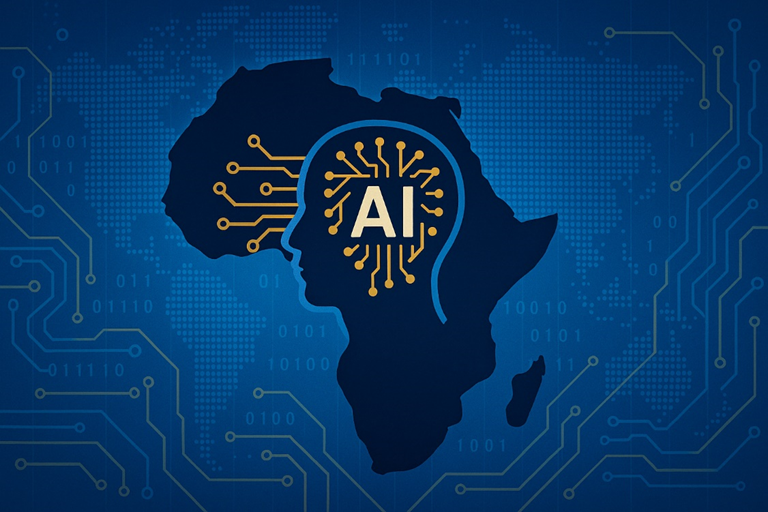
Artificial Intelligence is accelerating beyond traditional automation into a new phase where systems can plan, reason, and act independently. This “agentic era” is redefining how organisations operate globally — and Africa stands at a critical turning point.
Coming from Dreamforce 2025 in San Francisco, one thing is clear: Africa’s competitiveness will depend on how quickly and responsibly its institutions adopt AI. Businesses across the continent are expected to deliver more value with constrained budgets and leaner teams. AI offers a practical pathway, not as a flashy trend, but as a dependable partner that can take on operational workload at scale.
However, real transformation requires more than deploying tools. It demands new organisational capabilities that ensure AI is aligned with strategy, governed ethically, and used effectively by the workforce. Five core functions will be essential for African enterprises preparing for this new era.
1. AI Agent Management – Moving from Ideas to Measurable Impact
This function ensures AI initiatives solve real business problems. It identifies high-value use cases — from customer engagement to operational efficiency — and aligns them with outcomes that matter.
Institutions such as Absa have already demonstrated how AI can expand access to financial services and accelerate customer service delivery. For African markets, where skepticism around AI still persists, deployments must prove clear, practical benefits and move beyond experimentation.
2. AI Risk and Governance – Building a Foundation of Trust
Trust is the currency of AI adoption. Many large models are trained on data that inadequately represents African languages and contexts, resulting in biased or unreliable outputs.
Effective governance addresses this by embedding safeguards from the start — bias testing, transparency, data protection, and continuous monitoring. These processes are not bureaucratic hurdles; they are essential protections that allow AI systems to make independent decisions safely and responsibly.
3. AI Operations Management – Scaling What Works
Globally, most AI pilots fail — and in Africa, the financial consequences of failed experiments are even more severe. AI operations management ensures that deployments are stable, secure, and scalable.
Central to this function is the AI platform engineer, responsible for integrating data, systems, and agents into reliable workflows. Their role is to keep AI running continuously and efficiently, ensuring it delivers long-term business value.
4. AI Workforce Training & Development – Closing the Digital Skills Gap
AI adoption succeeds only when employees understand how to use it. Yet digital literacy remains uneven across Africa, with many education systems still not incorporating foundational computer skills.
The AI learning and development function must therefore prioritise structured training — progressing from basic understanding to advanced, role-specific skills. Insights from the latest Slack Workforce Index show that employees using AI report significantly higher job satisfaction, underscoring the importance of capability building.
5. AI Workforce Integration – Enhancing Human Potential
The future of work will be defined by collaboration between humans and AI agents. This function focuses on designing that collaboration effectively — reducing friction, improving productivity, and enabling teams to focus on strategic tasks.
Examples like Secret Escapes, which boosted autonomous customer resolution rates significantly, illustrate how well-designed AI systems free employees to deliver higher-value human engagement.
A Defining Moment for Africa
The shift to agentic AI is not a routine technology upgrade — it is a structural change in how organisations operate. For Africa, it offers a rare chance to accelerate service delivery, strengthen public institutions, and unlock new economic capacity without stretching limited budgets.
These five organisational capabilities — from governance to workforce integration — provide a blueprint for adopting AI safely and effectively. Without them, AI becomes guesswork. With them, it becomes a catalyst for meaningful progress.
The question now is simple: Can Africa afford to sit out this transformation — or will it seize the moment to shape its future in the agentic era?