

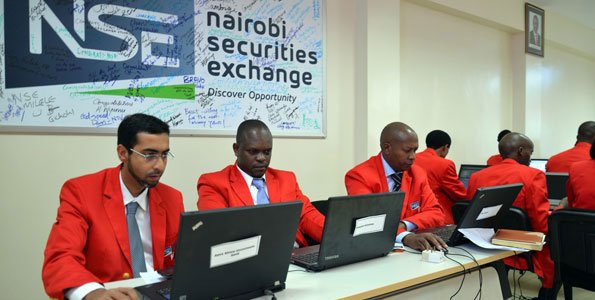
The Nairobi Securities Exchange (NSE) has made history—crossing the KSh 3 trillion market capitalization mark for the first time ever, a landmark moment that underscores a powerful resurgence of confidence among Kenyan investors.
This record-breaking achievement caps off a stellar year for the local bourse, with roughly KSh 1.1 trillion in new shareholder wealth created in 2025 alone, excluding dividends. The NSE All Share Index (NASI) has surged 56.2% year-to-date, marking its strongest annual performance since its inception in 2008.
But what’s truly remarkable is who’s driving the rally. According to the Capital Markets Authority (CMA), local investors now dominate more than 70% of all trading activity, the highest sustained domestic participation since 2010. This signals a major shift in Kenya’s capital markets—from being foreign-led to homegrown and locally powered.
A Rally That Reaches Every Corner of the Market
The surge isn’t confined to a few blue-chip names. Every major sector has benefited from the renewed investor enthusiasm, with investment and financial service firms leading the pack. Year-to-date, the investment services sector has returned a staggering 236.7%, followed closely by investment companies (182.2%), automobiles (150.5%), and energy (91.8%).
Even traditionally conservative industries such as banking (52.2%) and manufacturing (40.4%) have posted strong double-digit gains, reflecting broad-based market confidence.
Among the standout performers were Absa, Co-operative Bank, Equity Group, I&M Group, KCB Group, and Safaricom, all trading at or near their 52-week highs during Thursday’s session. Safaricom’s half-year results helped boost market turnover, reaffirming its pivotal role in Kenya’s financial ecosystem.
The Rise of Local Confidence
Unlike previous bull runs driven largely by foreign inflows, this rally tells a different story—it’s powered by Kenyan investors themselves. While foreign participation has slightly declined, overall market turnover has remained steady, proving that domestic investors are stepping up to the plate.
This transformation is no accident. Strategic reforms by the NSE and CMA have opened the market to a broader audience. The removal of the 100-share minimum rule has made it possible for small investors to buy single shares, while digital trading platforms have brought the stock market to millions of smartphones.
Education has also played a key role. The NSE Virtual Investment Challenge attracted a record 7,400 participants this year, while the NSE Digital Academy continues to train aspiring investors on smart trading and financial literacy.
A New Era for Kenyan Capital Markets
Crossing the KSh 3 trillion threshold isn’t just a financial statistic—it’s a symbol of economic resilience, investor maturity, and growing financial inclusion. It marks a turning point in Kenya’s capital markets, where local investors are no longer passive participants but active shapers of the country’s financial future.
As the rally continues, market analysts predict further growth ahead—driven by increased investor education, expanding digital access, and renewed corporate earnings strength.
Kenya’s stock market is no longer waiting for foreign validation—it’s building its own momentum from within.